Standing water on the patio or walkway
Water that pools in the middle of a hardscape and takes hours to evaporate means the surface has no drain and nowhere to flow. A grate set at the low point captures it.
Surface catch basins and area drains in Chandler. Capture pooling water from patios, low lawns and paved areas on flat clay and caliche lots.
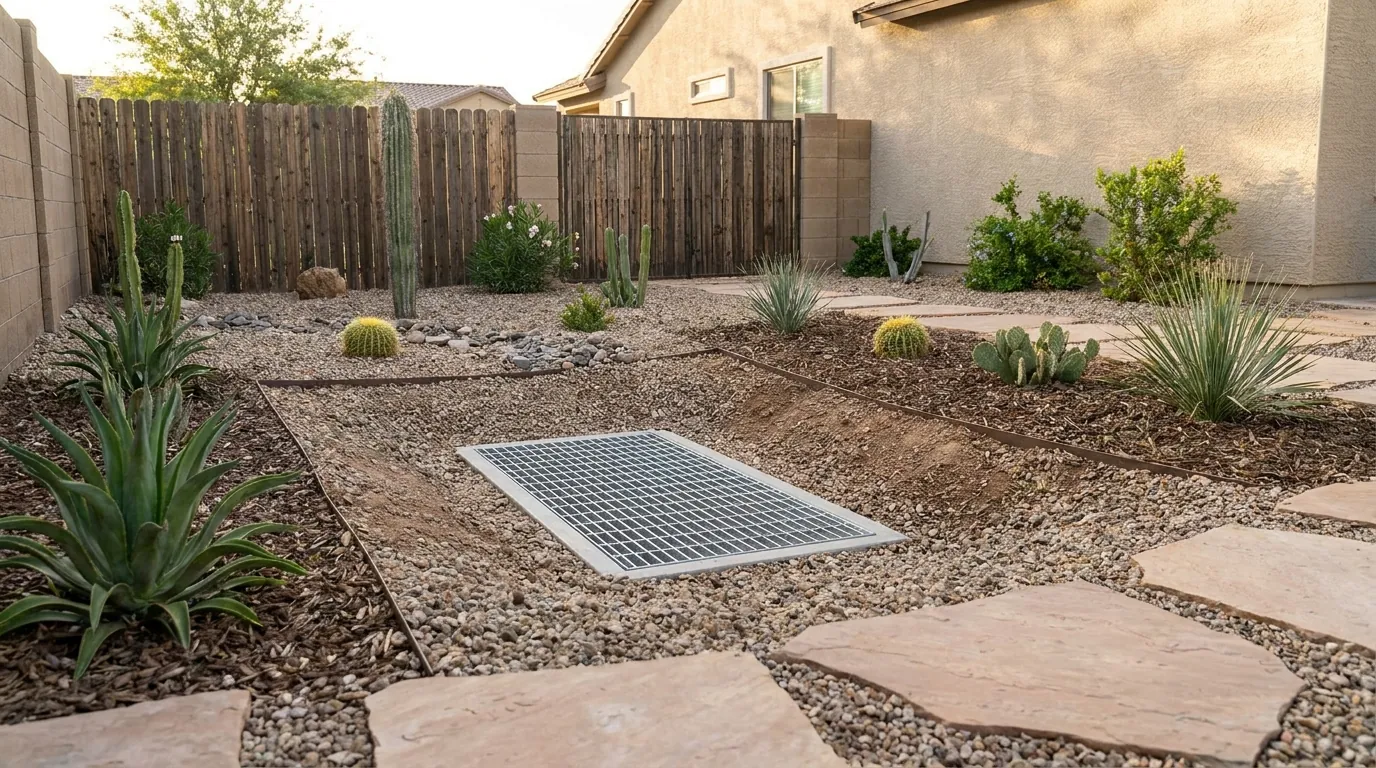
Some drainage problems are not in the soil — they are on the surface. A dip in the lawn that turns into a pond, a patio that puddles in the middle, a courtyard where water stands against a door threshold: these are low points that need a place for water to enter the drainage system. That entry point is a catch basin, a grated box set flush with the ground, or an area drain serving a paved surface. Water runs into the grate, drops into the basin, and leaves through a buried pipe to a safe outlet.
Chandler's flat lots and tight clay make surface collection especially important. When the ground won't absorb a monsoon downpour, water sheets across hardscape and lawn looking for the lowest point. If that low point happens to be beside your foundation, a slab, or a window well, the water just sits there. A catch basin placed at the real low spot gives it somewhere to go other than into the house.
Catch basins work best as part of a system. They often feed into a french drain or a buried line, and they pair naturally with downspout extension and buried drain lines so roof water and surface water both end up at the same managed outlet.
If you recognize any of these after a Chandler storm, water is collecting instead of leaving.
Water that pools in the middle of a hardscape and takes hours to evaporate means the surface has no drain and nowhere to flow. A grate set at the low point captures it.
A dip that stays wet and muddy days after rain is holding water the clay soil can't absorb. A catch basin collects it and a buried line carries it away.
When the lowest point on the lot is beside the foundation, every storm sends water toward the slab. Relocating the collection point with an area drain protects the structure.
Walled courtyards common on East Valley homes trap water with no path out. An area drain gives the enclosed space an outlet before it floods inward.
We find the true low points on your lot, size the basins, and connect them to an outlet that drains.
Serving Chandler, Gilbert, Mesa and the surrounding area.
A catch basin is a surface collection point — a grated box that water flows into from above. A french drain collects water from within the soil along a buried gravel trench. Many yards use both: basins grab surface pooling and feed a buried line to the outlet.
At the lowest point where water actually collects, which is not always where you'd guess. We check the grade across the lot so the basin sits where water naturally wants to pond, then run the outlet line downhill from there.
Sizing matters. A basin and outlet pipe have to move water fast enough for Chandler's short, intense storms, or the grate backs up. We size the basin and the buried line to the area draining into them rather than installing an undersized box.
Leaves, decomposed granite and sediment can collect on a grate over time, which is normal. Basins are designed to be opened and cleared, and placing them where you can reach them keeps that easy. We can point out what to keep an eye on for your setup.