Downspout Extension and Buried Drain Lines in Chandler, AZ
Downspout extension and buried drain lines in Chandler, AZ. Route roof runoff away from the foundation on flat clay and caliche lots.
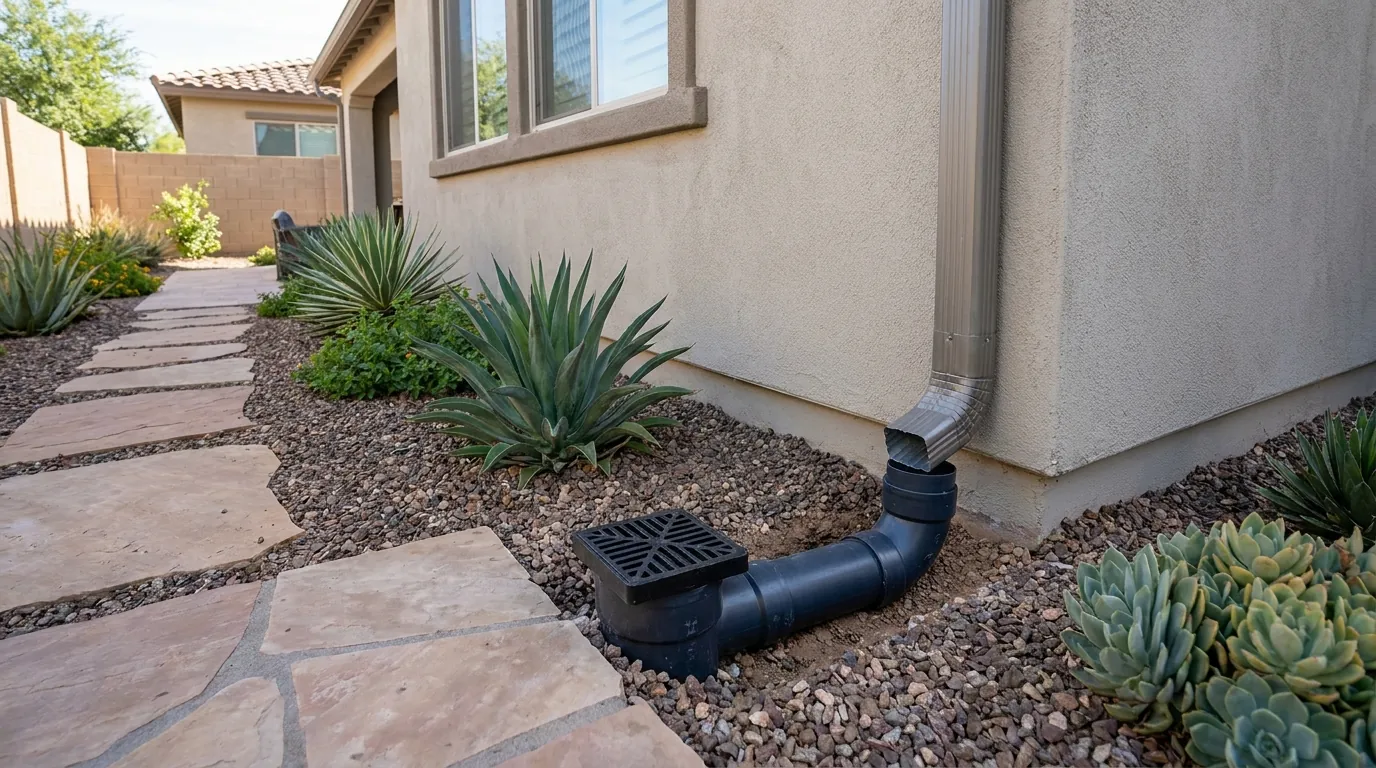
Where your roof water goes matters most
A single Chandler roof sheds a surprising amount of water in a monsoon downburst, and every gallon lands in a few concentrated spots at the base of the downspouts. If those downspouts dump right at the wall — as many do — that water pools against the foundation and soaks into the soil exactly where you least want it. Downspout extensions and buried drain lines take that concentrated roof flow and carry it well away from the house to a controlled outlet.
On Chandler's flat clay and caliche lots, surface extensions alone often aren't enough. Water let out a few feet from the wall still has nowhere to drain because the soil won't absorb it, so it migrates back toward the slab. A buried solid-wall line, pitched downhill to a pop-up emitter, dry well, or street, actually removes the water from the foundation zone instead of just relocating it a step away.
Managing roof water first makes every other drainage fix work better. Keeping downspout flow out of the yard protects a french drain from being overwhelmed, and buried lines tie neatly into surface catch basins and area drains so all of the water leaves at one planned point.
How we route roof water away
The goal is simple: get concentrated roof flow out of the foundation zone and to a safe outlet.
-
Assess roof volume and discharge points
We look at how much roof drains to each downspout and where that water currently lands. The worst offenders are usually downspouts emptying at inside corners or next to the slab.
-
Set the line and the fall
A buried solid-wall pipe is pitched to run continuously downhill. On a flat Chandler lot, finding enough fall to reach a workable outlet is the real engineering, and caliche can make the trenching slower.
-
Connect downspouts and lay the pipe
Each downspout is tied into the buried line through a fitting that handles the surge of a hard storm. Solid pipe keeps roof water moving toward the outlet rather than leaking it back into the soil.
-
Finish at a clear outlet
The line ends at a pop-up emitter in a low spot, a dry well, or a street discharge where allowed. A clear, free-draining outlet is what keeps the whole line from backing up in the next storm.
Move roof water where it belongs
We'll map your downspouts, find the fall, and bury lines that take roof runoff past the foundation for good.
Serving Chandler and the East Valley.
Frequently asked questions
Why isn't a surface downspout extension enough?
On absorbent soil a surface extension can work, but Chandler's clay and caliche don't take water in. Water released a few feet from the wall just pools and migrates back. A buried line pitched to a real outlet removes it from the foundation zone entirely.
What kind of pipe is used for roof water?
Buried downspout lines use solid-wall pipe, not the perforated kind. The point is to keep roof water inside the pipe and carry it to the outlet, the opposite of a french drain, which uses slotted pipe to let soil water in.
Where does the water come out?
Typically at a pop-up emitter in a lower part of the yard, a dry well, or a street discharge where codes allow it. The outlet must be lower than the downspouts and drain freely so the line clears after a storm.
Can you combine downspout lines with other drainage?
Yes, and it's usually the smartest approach. Roof water, catch basins, and a french drain can all tie into one buried system heading to a shared outlet, which keeps the yard from working against itself during a heavy downpour.