Yard Drainage & French Drains in Mesa, AZ
Yard drainage and french drain installation for Mesa, AZ homes with larger lots that pond over caliche after monsoon downpours.
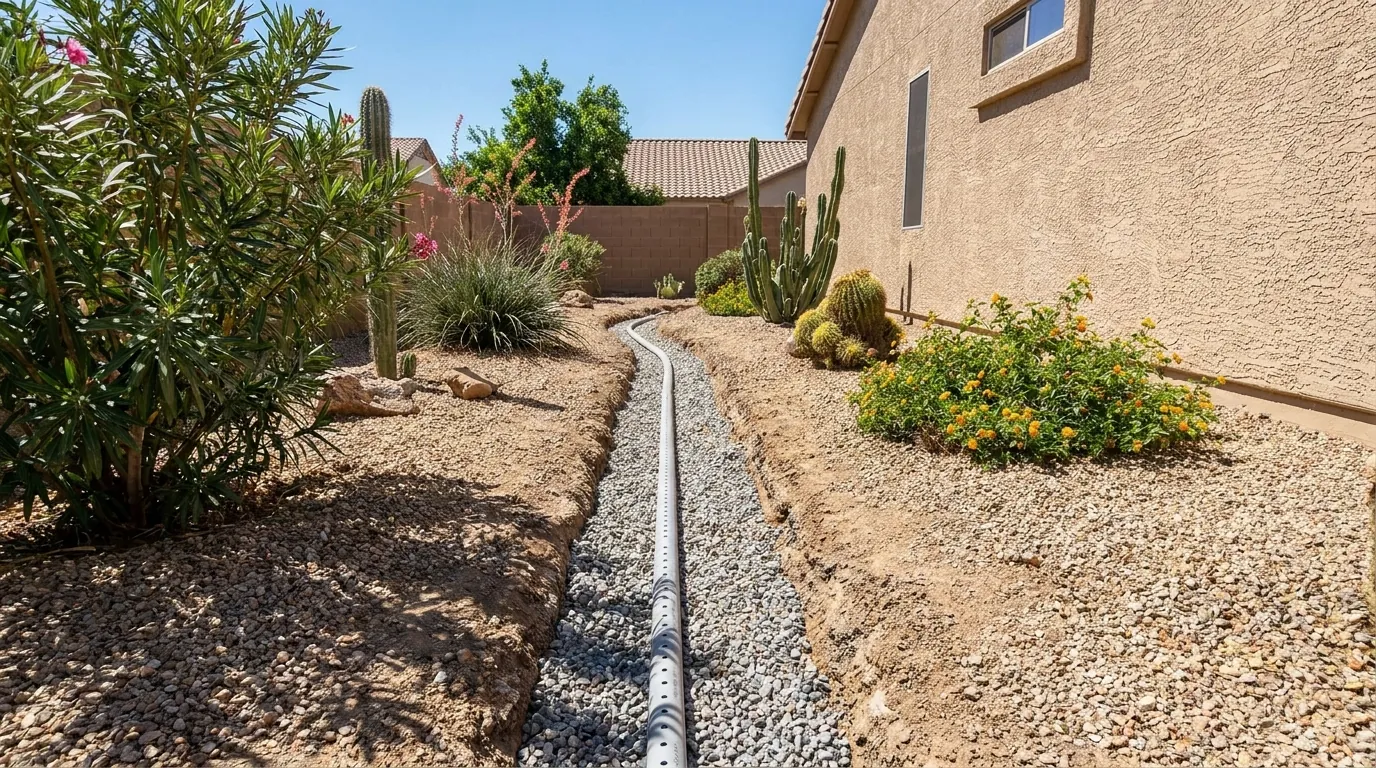
Drainage Work in Mesa
Mesa sits northeast of Chandler and covers a wide range of neighborhoods, from established central areas to newer subdivisions on the eastern edge. What ties them together for drainage is the same hard caliche layer found across the East Valley and, in many neighborhoods, larger lots than you find closer in. On a big lot, water has more room to travel and collects in greater volume before it reaches a low spot, so a drain has to be sized to the whole area feeding into it rather than dropped in as a standard run.
When a monsoon storm rolls through, caliche below the surface blocks rain from soaking down, so the water sheets across the top of the yard and ponds wherever the grade dips. Left alone, it sits against foundations, kills turf, and softens soil around patios and block walls until it finally evaporates.
We plan the trench length, depth, and outlet around how your specific lot drains, cutting to or below the caliche layer so water actually moves instead of perching. It is part of our yard drainage french drain service, and we also handle french drain repair when an older Mesa system has silted up or collapsed.
Ponding on Your Mesa Lot?
Tell us how large the wet area is and where water tends to gather, and we will scope what a french drain would take. Review our [installation options](/services/yard-drainage-french-drain-installation/) to get started.
Serving Mesa and the greater East Valley.
Frequently asked questions
Do larger Mesa lots need a longer french drain?
Often yes. On a big lot water travels farther and collects in more volume, so the drain length and outlet are sized to the area draining into it rather than a fixed standard run.
Why does water sit on my Mesa yard after a monsoon storm?
Caliche below the surface blocks water from soaking in, so heavy rain runs across the top and ponds in low spots. Without a graded drain path, that water sits until it slowly evaporates.
When should I plan drainage work in Mesa?
The cooler, drier months are best for trenching and grading, and finishing before summer means the system is ready for monsoon downpours.